Talking to kids about online safety is one of the most important things a parent can do, and one of the trickiest to get right. Push too hard and children shut down, convinced you are trying to take their devices away. Paint too frightening a picture and they become anxious every time they open an app. Say nothing at all and they navigate the digital world without a compass.
The good news is that you do not need to be a cybersecurity expert or deliver a perfect speech. What matters most is creating an ongoing dialogue where your child feels safe telling you what they encounter online, even when it is uncomfortable.
Why the Way You Talk About It Matters
Research from the Family Online Safety Institute shows that children who have regular, non-judgmental conversations with their parents about online experiences are significantly more likely to come to a parent when something goes wrong. The keyword is non-judgmental. If a child expects to lose their phone the moment they report a problem, they will simply stop reporting.
Your tone sets the stage. Approach these conversations with curiosity rather than fear, and your child will mirror that openness.
Laying the Groundwork: General Principles
Before diving into specific conversation starters, keep these principles in mind:
- Make it ongoing, not a one-time event. Online safety is not a single "big talk." It is dozens of small, casual conversations over months and years.
- Meet them where they are. A seven-year-old needs different language than a thirteen-year-old. Tailor your approach to your child's age and maturity level.
- Ask more than you tell. Questions invite dialogue. Lectures invite tuning out.
- Stay calm, no matter what they share. If your child tells you something alarming, take a breath before reacting. Your calm response today determines whether they come to you tomorrow.
- Use everyday moments. Car rides, walks, and bedtime are natural windows for casual conversation. You do not need to schedule a formal sit-down.
Conversation Starters for Younger Children (Ages 5-8)
At this age, kids are beginning to use tablets, watch YouTube, and possibly play simple online games. They need foundational concepts: not everyone online is who they say they are, some content is not meant for kids, and it is always okay to tell a grown-up if something feels wrong.
About Strangers Online
- "If someone you don't know sent you a message while you were playing your game, what would you do?"
- "You know how we talk about not going with strangers at the park? The internet has strangers too. Have you ever seen a message from someone you didn't know?"
About Uncomfortable Content
- "Have you ever seen something on your tablet that made you feel weird or scared? It's totally okay to tell me. You won't be in trouble."
- "Sometimes things pop up on screens that aren't meant for kids. If that happens, just close it and come find me. You're not in trouble for seeing it."
About Sharing Personal Information
- "What are some things we should keep private and not tell people on the internet?" (Let them brainstorm: name, address, school, photos.)
- "If a game asked you to type in your real name or where you live, what would you do?"
Conversation Starters for Tweens (Ages 9-12)
Tweens are often getting their first smartphones and social media accounts. They are highly influenced by peers and increasingly want privacy. Conversations at this stage should address peer pressure, digital footprints, and the difference between online friends and real-life friends.
About Social Media
- "I've heard a lot of kids your age are using [app name]. What do you think about it? Do any of your friends use it?"
- "What's something you really like about being online? And is there anything about it that bugs you?"
About Privacy and Digital Footprints
- "Did you know that things you post online can stick around for a really long time, even if you delete them? What do you think about that?"
- "If a future coach or teacher searched your name online, what would they find? Is that what you'd want them to see?"
About Peer Pressure and Cyberbullying
- "Has anyone ever said something mean to someone in a group chat or comment section? What happened?"
- "If a friend asked you to share a photo or message that didn't feel right, how would you handle that?"
- "What would you do if you saw someone being made fun of online? Do you think it's easier to be mean on a screen than in person?"
About Online Friendships
- "Do you talk to anyone online that you haven't met in person? Tell me about them."
- "What do you think is the difference between a friend you see at school and someone you only know online?"
Conversation Starters for Teens (Ages 13-17)
Teens value autonomy and may resist what feels like surveillance. The most effective approach at this age is collaborative: position yourself as an ally, not an adversary. Topics should include sextortion, misinformation, mental health impacts of social media, and responsible sharing.
About Predators and Sextortion
- "I read about something called sextortion, where people pressure teens into sharing private images and then threaten them. Have you heard of this happening to anyone?"
- "If someone online ever made you feel pressured or uncomfortable, I want you to know you can tell me. I won't take your phone away. I'll help you figure out what to do."
About Mental Health and Social Media
- "Do you ever feel worse about yourself after spending time on social media? A lot of people do, including adults."
- "How do you think the stuff you see online affects how you feel about your own life?"
About Misinformation
- "How do you decide whether something you see online is actually true?"
- "Have you ever shared something and later found out it wasn't accurate? How did that feel?"
About Sharing and Consent
- "Before you post a photo of someone else, do you usually ask them first? How would you feel if someone posted a photo of you that you didn't like?"
- "What's your take on how much personal stuff people share online? Where's the line for you?"
About Difficult Situations
- "If something happened online that really upset you, who would you talk to first?"
- "Is there anything going on online right now that you wish an adult understood better?"
What to Do When They Open Up
The conversations above are designed to open doors. When your child walks through one, here is how to keep it open:
- Listen first. Resist the urge to immediately problem-solve or lecture. Let them finish.
- Thank them for telling you. "I'm really glad you told me that" reinforces the behavior.
- Ask what they need. "Do you want my advice, or do you just want me to listen?" gives them agency.
- Follow through calmly. If they report something serious, handle it without overreacting. Confiscating devices as a first response teaches kids to hide problems, not solve them.
- Circle back. A day or two later, check in: "Hey, how are you feeling about that thing we talked about?" This shows you care beyond the initial conversation.
Building a Culture of Openness
The ultimate goal is not to have one perfect conversation. It is to build a family culture where talking about online life is as normal as talking about school or sports. A few ways to reinforce that culture:
- Share your own experiences. "I got a weird phishing email today. Let me show you what it looked like." This normalizes digital literacy as a family practice.
- Stay curious about their world. Ask about the apps they use, the creators they follow, and the trends they find funny. Genuine interest builds trust.
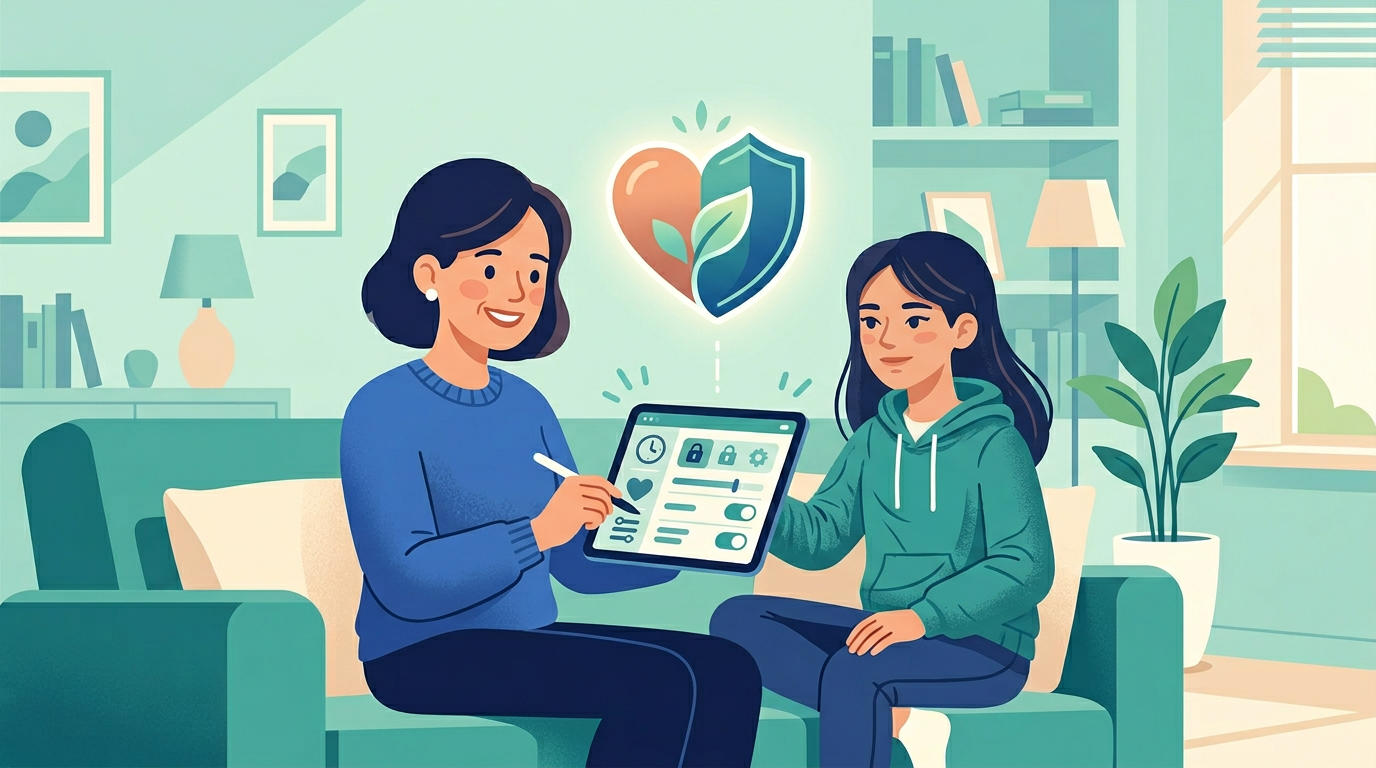
- Use monitoring tools as a partnership. Platforms like CyberSafely.ai can alert you to concerning interactions, giving you a natural opening for conversation rather than a reason for confrontation.
Conclusion
You do not need a script to talk to your kids about online safety. You need consistency, curiosity, and a willingness to listen without judgment. Start with one conversation starter from the list above, adapt it to your child's age and personality, and let the dialogue grow from there. The fact that you are having the conversation at all puts your family in a much stronger position. And remember: the goal is not to make your child afraid of the internet. It is to make them confident, thoughtful, and willing to come to you when they need help.