The statistics are alarming. Over the past decade, teen depression, anxiety, and suicidal ideation have climbed sharply, and a growing body of research points to excessive screen time and social media use as significant contributing factors. For parents, the challenge is clear: how do you protect your child in a digital world that is designed to keep them scrolling?
Parental control tools are not about spying or restricting freedom. They are about creating a safety net during a period of development when young people are especially vulnerable. This article explores the connection between screen use and mental health risk, and offers a framework for using monitoring tools in a way that strengthens rather than undermines your relationship with your child.
The Link Between Screen Time and Teen Mental Health
What the Research Shows
Multiple large-scale studies have found correlations between heavy social media use and increased rates of depression, anxiety, loneliness, and suicidal thoughts in adolescents. The U.S. Surgeon General issued an advisory in 2023 warning that social media presents a "profound risk of harm" to young people's mental health, and follow-up research has only reinforced that concern.
Key findings include:
- Teens who spend more than three hours per day on social media face double the risk of depression and anxiety symptoms compared to those who spend less time online.
- Algorithms on platforms like TikTok, Instagram, and YouTube are optimized for engagement, frequently surfacing content related to self-harm, eating disorders, and suicide to vulnerable users.
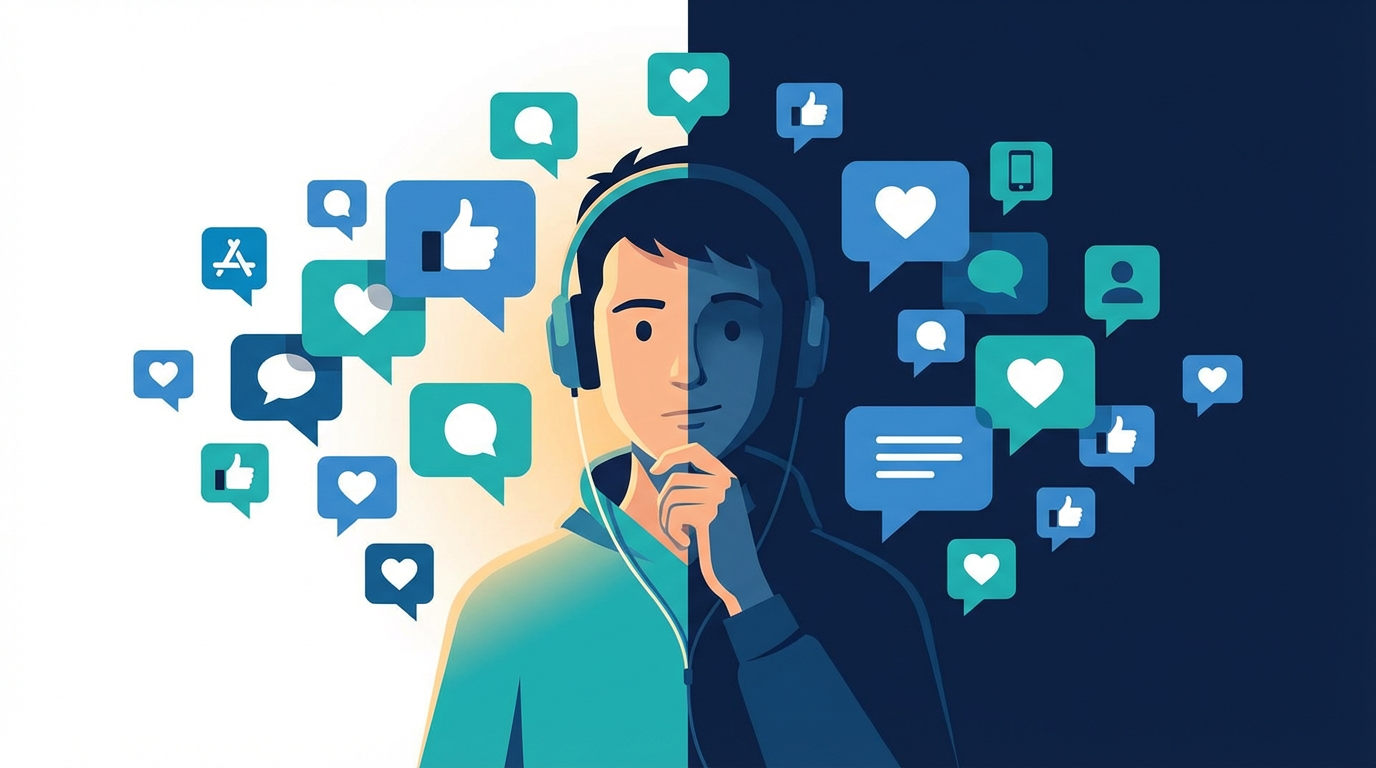
- Cyberbullying, social comparison, and fear of missing out (FOMO) compound the psychological toll of constant connectivity.
- Sleep disruption caused by late-night device use is itself a major risk factor for depression and suicidal ideation.
Why Teens Are Especially Vulnerable
The adolescent brain is still developing, particularly the prefrontal cortex, which governs impulse control, judgment, and long-term decision-making. This means teens are neurologically less equipped to self-regulate their screen use or critically evaluate the content they consume. They are also in a stage of identity formation where peer validation feels existentially important, making the social dynamics of platforms like Snapchat and Instagram especially potent.
Why Parental Controls Matter
A Safety Net, Not a Surveillance System
Think of parental control tools the way you think about a seatbelt. You do not wear a seatbelt because you expect a crash every time you drive. You wear it because the consequences of not having one during a crisis are devastating.
Parental controls serve a similar function. They help you:
- Set boundaries around screen time so that devices do not dominate your child's day or disrupt sleep.
- Filter harmful content including graphic violence, self-harm material, and age-inappropriate sexual content.
- Monitor for warning signs such as conversations involving bullying, predatory behavior, or expressions of hopelessness.
- Create structured digital habits that support rather than undermine your child's wellbeing.
What Effective Tools Look Like
Not all parental controls are created equal. The most effective solutions go beyond simple website blockers. Look for tools that offer:
- Content monitoring with context -- tools that use AI to flag concerning patterns in messages and posts, rather than just blocking keywords.
- Screen time scheduling -- the ability to set daily limits and enforce device-free periods like bedtime and homework time.
- App-level controls -- granular management of which apps can be installed and used, and when.
- Alert systems -- real-time notifications when potentially dangerous content or interactions are detected.
- Reporting dashboards -- summaries that help you understand your child's digital habits over time without requiring you to read every message.
How to Implement Controls Without Breaking Trust
This is the part many parents struggle with most. You want to protect your child, but you also do not want them to feel surveilled or mistrusted. The good news is that these goals are not mutually exclusive.
Start with a Conversation
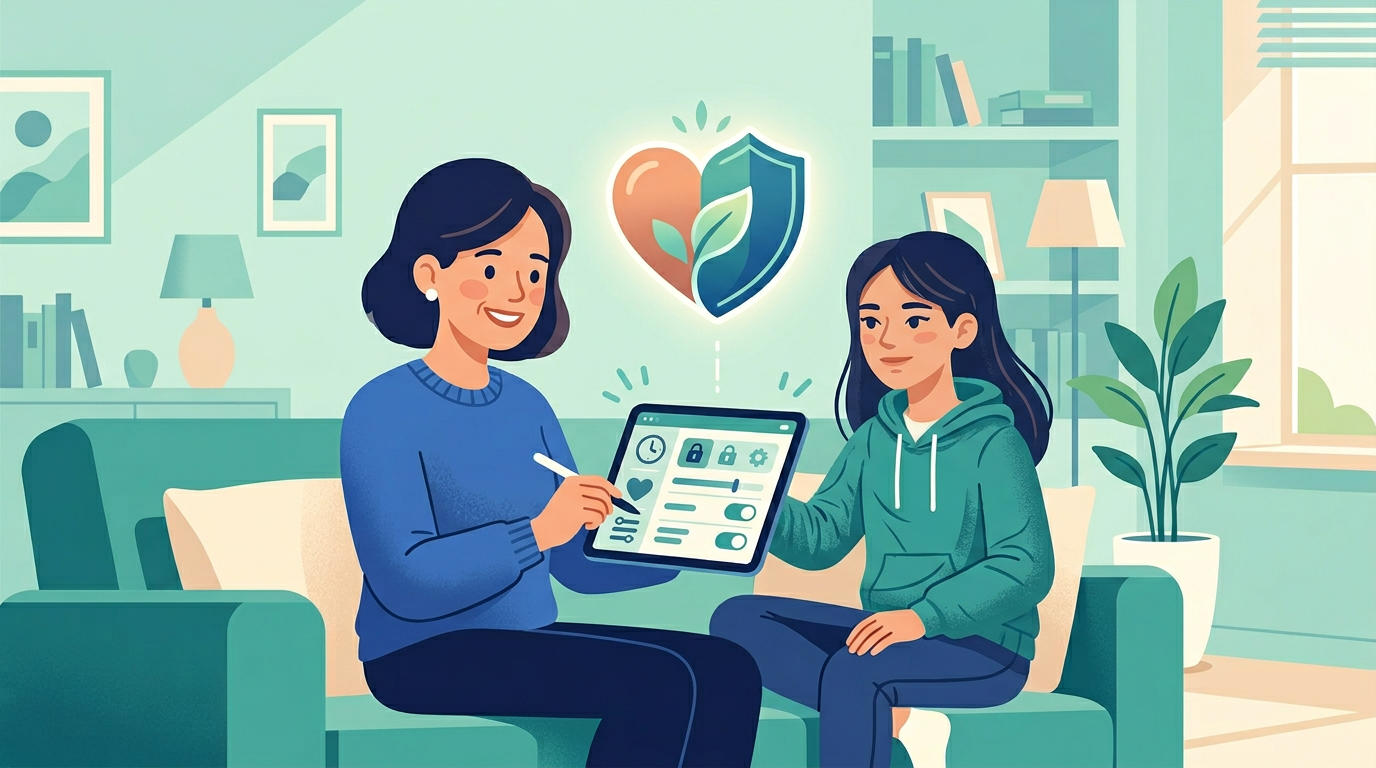
Before installing any tool, talk to your child about why you are doing it. Be honest and age-appropriate:
- For younger teens (11-13): "Part of my job as your parent is keeping you safe. Just like I check that you wear your seatbelt, I want to make sure you're safe online too. We're going to use a tool that helps me do that."
- For older teens (14-17): "I trust you, and I also know that the internet can put you in situations that are hard for anyone to handle alone. I want us to have a safety plan together, and monitoring is part of that."
Be Transparent About What You Monitor
Children who know monitoring is happening and understand the reasoning behind it are far more likely to accept it than those who discover it by accident. Surprise surveillance destroys trust. Transparent safety measures build it.
Adjust as They Mature
Parental controls should evolve as your child grows. A 12-year-old needs different guardrails than a 16-year-old. Gradually loosening restrictions as your teen demonstrates responsible behavior teaches them self-regulation and shows that you respect their growing independence.
Focus on Patterns, Not Policing
Use monitoring data to identify concerning trends rather than to punish individual actions. If you notice your child is up on their phone until 2 a.m. every night, that is a conversation about sleep and health, not a gotcha moment.
Recognizing Warning Signs
Even with tools in place, parental awareness is irreplaceable. Watch for:
- Withdrawal from family, friends, or activities they used to enjoy
- Sudden changes in mood, appetite, or sleep patterns
- Secretive behavior around devices or sudden deletion of apps and messages
- Expressions of hopelessness, worthlessness, or being a burden
- Giving away possessions or saying goodbye in unusual ways
If you observe these signs, do not wait. Reach out to your child directly, contact their school counselor, or call the 988 Suicide and Crisis Lifeline (call or text 988) for immediate guidance.
Building a Broader Safety Strategy
Parental controls are one layer of a multi-layered approach. Complement them with:
- Regular check-ins about your child's online experiences, not just their grades or chores.
- Device-free family time that normalizes being offline and strengthens real-world connections.
- Your own digital modeling -- children mirror what they see. If you are on your phone constantly, the message is clear regardless of what rules you set.
- Professional support when needed. Therapists who specialize in adolescent mental health and digital wellness can be invaluable partners.
Conclusion
The connection between excessive screen time and teen mental health is too well-documented to ignore, and the stakes are too high to leave safety to chance. Parental control tools give you visibility and influence during a critical window of your child's development. Used transparently and with care, they do not replace trust -- they reinforce it. The goal is not to control your child's every move online. It is to ensure that while they are learning to navigate the digital world, someone is watching out for them.