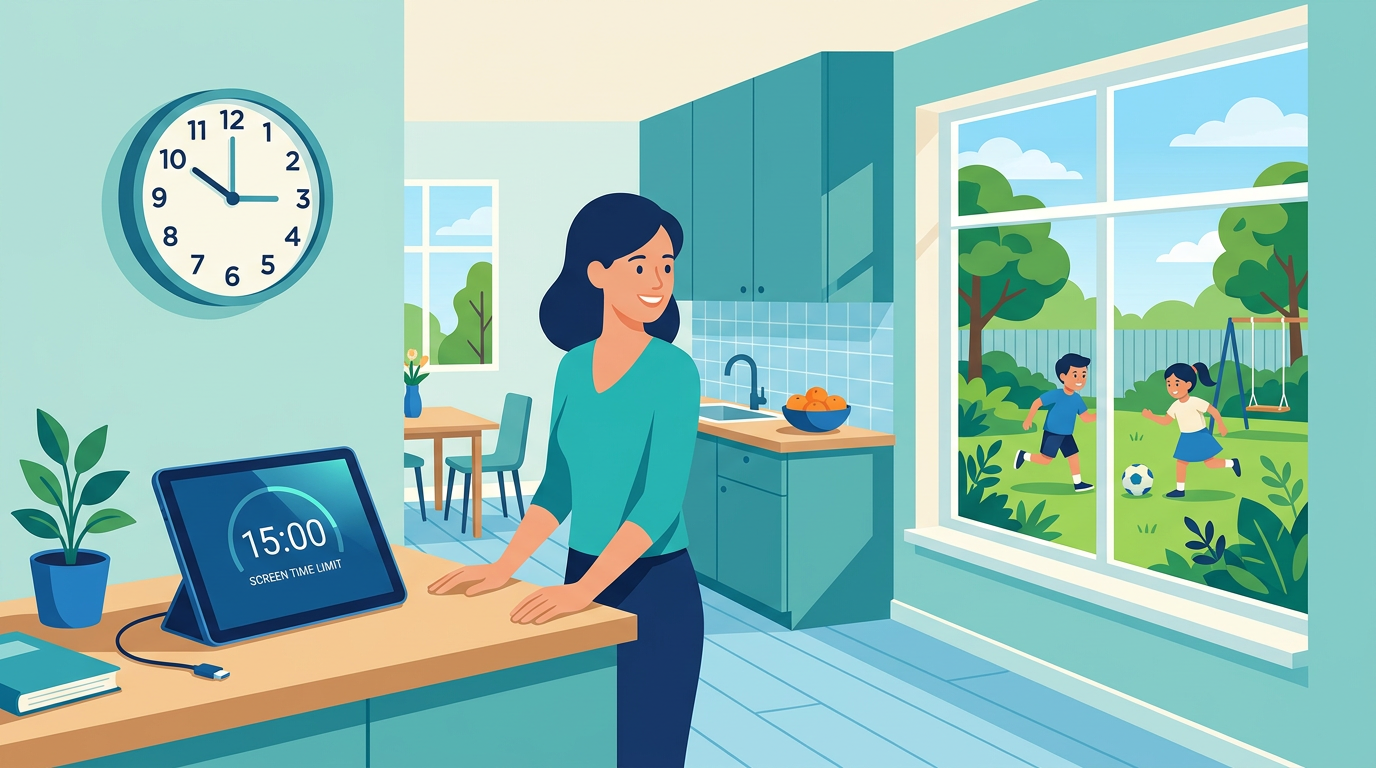

If your child cannot seem to sit through homework without reaching for their phone, you are not alone. Teachers, pediatricians, and parents across the country are reporting the same pattern: children and teens are struggling to focus in ways that previous generations did not. The culprit is not laziness or a lack of intelligence. It is a phenomenon researchers call attention fragmentation, and it is being driven by the devices and platforms that dominate young lives.
What Is Attention Fragmentation?
Attention fragmentation is the breaking up of sustained focus into shorter and shorter intervals. Rather than concentrating on a single task for an extended period, the brain becomes accustomed to constant switching -- checking a notification, glancing at a video, scrolling a feed, then trying to return to the original task.
Every switch carries a cognitive cost. Research from the University of California, Irvine found that after an interruption, it takes an average of 23 minutes to fully return to the original task. For a child doing homework while their phone buzzes with group chat messages and app notifications, the math is devastating. They may spend an hour at their desk but achieve only 15 minutes of actual focused work.
How Devices Drive the Problem
Modern apps and platforms are engineered for maximum engagement, which means maximum interruption:
- Push notifications create a constant stream of stimuli competing for your child's attention.
- Short-form video (TikTok, YouTube Shorts, Instagram Reels) trains the brain to expect new content every 15 to 60 seconds, making longer tasks feel unbearable by comparison.
- Infinite scroll removes natural stopping points, encouraging mindless consumption rather than intentional use.
- Variable reward patterns -- the same psychological mechanism behind slot machines -- keep users checking back compulsively for likes, comments, and new content.
Over time, these design patterns physically reshape attention habits. The brain optimizes for what it practices, and if what it practices is rapid switching, sustained focus becomes increasingly difficult.
Signs Your Child May Be Struggling
Attention fragmentation does not always look like the stereotypical image of a distracted child. Watch for these patterns:
- Homework takes dramatically longer than it should. A 30-minute assignment stretches to two hours, not because the material is hard, but because focus keeps drifting.
- Difficulty completing tasks that require multi-step thinking, such as writing an essay, reading a chapter, or solving complex math problems.
- Restlessness and irritability when asked to do anything that does not provide immediate stimulation.
- Declining academic performance that does not match your child's ability level.
- Complaints of boredom during activities that are not screen-based, including conversations, meals, and outdoor play.
- Difficulty following conversations or instructions that require listening for more than a few minutes.
When It Might Be Something More
It is important to distinguish between attention fragmentation caused by device habits and clinical conditions like ADHD. If your child has always struggled with focus -- even before heavy device use -- or if the difficulties are severe enough to impair daily functioning across multiple settings, a professional evaluation is worthwhile. A pediatrician or child psychologist can help determine whether the issue is behavioral, neurological, or a combination of both.
Practical Strategies for Parents
The good news is that attention is a skill, and like any skill, it can be strengthened with practice and the right environment.
Create Device-Free Study Zones
The single most impactful change you can make is removing the phone from the homework environment entirely. Not on silent. Not face-down on the desk. Out of the room.
- Designate a specific area in your home for homework and studying where phones, tablets, and gaming devices are not allowed.
- If your child needs a computer for schoolwork, use browser extensions or parental controls to block social media and entertainment sites during study hours.
- Provide a physical timer so your child can see how long they have been working and how much time remains, creating structure without relying on a phone clock.
Use the Pomodoro Technique
This time-management method works well for children and teens:
- Work with full focus for 25 minutes.
- Take a 5-minute break (no screens during the break -- stretching, snacking, or walking is ideal).
- Repeat for three or four cycles, then take a longer 15-20 minute break.
Start with shorter focus periods if 25 minutes feels impossible, and gradually increase the duration as your child builds stamina.
Establish Tech-Free Transitions
Build buffer time between device use and tasks that require focus. If your child has been scrolling on their phone for an hour, they will not be able to switch instantly into homework mode. Allow 10 to 15 minutes of a non-screen transitional activity -- a snack, a short walk, or even just a conversation -- before expecting focused work.
Set Consistent Screen Time Boundaries
Children thrive with predictability. Establish clear and consistent rules around when devices can be used:
- No phones during meals. This protects family connection time and practices sustained attention in conversation.
- No screens for at least 30 minutes before bed. Blue light and stimulating content both disrupt sleep, which in turn impairs focus the next day.
- Earned screen time. Consider tying recreational device use to completed responsibilities. Homework and chores first, screens second.
Model the Behavior You Want to See
Children learn more from what you do than what you say. If you are checking your phone during dinner, scrolling while they talk to you, or falling asleep with a screen in hand, your rules will feel hypocritical. Make your own device boundaries visible and explicit. "I'm putting my phone in the other room so I can focus on cooking dinner" teaches more than any lecture.
Rebuild Attention Through Offline Activities
Encourage activities that naturally require sustained focus:
- Reading physical books -- even 15 minutes a day builds concentration.
- Board games and puzzles that require strategic thinking over extended periods.
- Sports and physical activities that demand present-moment awareness.
- Creative hobbies like drawing, building, cooking, or playing a musical instrument.
- Unstructured outdoor time where boredom becomes a catalyst for imagination rather than a prompt to reach for a device.
When to Seek Professional Help
If you have made consistent environmental changes over several weeks and your child's focus does not improve, or if you notice significant academic decline, emotional distress, or behavioral changes, it is time to involve a professional. Start with your child's pediatrician, who can screen for ADHD, anxiety, depression, and sleep disorders -- all of which affect attention and can be compounded by excessive screen use.
A therapist who specializes in adolescent behavioral health or digital wellness can also help your child develop personalized coping strategies and healthier technology habits.
Conclusion
Attention fragmentation is not a character flaw in your child. It is a predictable consequence of growing up immersed in technology designed to capture and hold attention in ever-shorter bursts. The solution is not to eliminate technology entirely, but to create environments and habits that give your child's developing brain the space to practice sustained focus. With consistent boundaries, intentional offline time, and your own modeling of healthy device habits, you can help your child rebuild the concentration skills they need to succeed in school and beyond.