The Shifting Digital Landscape in Education
Social media is no longer an after-school activity -- it is deeply embedded in the daily lives of students, including during school hours. From group chats organized by class period to platforms used for collaboration and communication, the line between academic and social technology has blurred considerably. This reality presents schools with both an opportunity and an obligation: to create digital environments where students can learn, connect, and grow without being exposed to the harms that unmanaged social media use can bring.
Across the country, forward-thinking schools and districts are taking meaningful steps to address this challenge. Through a combination of policy development, monitoring technology, digital citizenship education, and family engagement, these institutions are building frameworks that prioritize safety without sacrificing the benefits of connected learning.
The Three Pillars of Safer Social Media in Schools
Pillar 1: Clear, Enforceable Policies
Effective social media safety begins with well-crafted policies that set expectations for students, staff, and families. The strongest school policies share several characteristics:
Scope and clarity. Policies should explicitly define what is covered -- school-issued devices, school Wi-Fi networks, personal devices on campus, and online behavior that affects the school community regardless of where or when it occurs. Ambiguity creates enforcement gaps.
Behavioral expectations. Rather than simply listing prohibited actions, effective policies articulate positive expectations for digital conduct. Students should understand not only what they cannot do, but what responsible digital behavior looks like.
Graduated consequences. A first-time offense by a student who shares an inappropriate meme should not carry the same weight as a sustained cyberbullying campaign. Tiered consequence structures allow for proportional responses and create room for restorative approaches.
Staff guidelines. Policies should also address staff use of social media, including boundaries around student-staff communication on personal platforms, appropriate use of social media for classroom activities, and expectations for modeling digital citizenship.
Regular review. The digital landscape changes rapidly. Policies should be reviewed and updated annually at minimum, with input from students, parents, staff, and legal counsel.
Pillar 2: Monitoring and Filtering Technology
Technology alone cannot solve social media safety challenges, but it is an essential component of a comprehensive strategy. Schools are deploying several categories of tools:
Network-Level Filtering
Most schools already filter internet access on school networks to block inappropriate content. Modern filtering solutions go beyond simple URL blocking to include:
- Category-based filtering that adapts to new sites and content in real time
- SSL inspection to monitor encrypted traffic
- Customizable policies by grade level, time of day, or user group
- Reporting dashboards that surface trends in blocked content and usage patterns
Device-Level Monitoring
For school-issued devices, monitoring software provides visibility into student activity beyond the school network:
- Application usage tracking
- Keyword and phrase detection for concerning content (self-harm language, bullying indicators, threats)
- Screenshot capture triggered by policy violations
- Alerts to designated staff when concerning activity is detected
Social Media Monitoring
Specialized platforms can monitor publicly visible social media activity associated with students, flagging posts that contain indicators of bullying, threats, substance abuse, or mental health crises. These tools add a layer of protection for activity that occurs on personal accounts and devices.
Balancing Safety and Privacy
Monitoring technology raises legitimate privacy concerns that schools must address proactively:
- Transparency: Students and families should know what is being monitored, why, and who has access to the data
- Proportionality: Monitoring should be calibrated to actual risk. Younger students on school devices may warrant more oversight than older students on personal devices
- Data security: Student monitoring data must be protected with the same rigor as other sensitive student records, in compliance with FERPA and applicable state laws
- Purpose limitation: Data collected for safety monitoring should not be repurposed for disciplinary fishing expeditions or academic surveillance
Pillar 3: Digital Citizenship Education
Policies and monitoring tools create guardrails, but lasting change requires education that builds students' internal capacity to navigate digital spaces responsibly. The most effective digital citizenship programs share these qualities:
Age-Appropriate and Ongoing
Digital citizenship is not a single lesson -- it is a developmental progression. Topics and depth should evolve as students mature:
- Elementary: Kindness online, personal information boundaries, asking an adult for help
- Middle school: Social media dynamics, digital footprint awareness, recognizing manipulation and pressure
- High school: Privacy management, critical media literacy, ethical digital participation, understanding platform business models
Integrated, Not Isolated
The strongest programs embed digital citizenship into existing subjects rather than treating it as a standalone unit. English classes can analyze online rhetoric. Science classes can explore the neuroscience of screen addiction. Social studies can examine the civic implications of algorithmic content curation. This approach reinforces that digital responsibility is not a separate skill -- it is a dimension of every discipline.
Student-Led
Programs that empower students as leaders and peer educators consistently outperform purely adult-driven initiatives. Strategies include:
- Student technology committees that advise on policy
- Peer mentoring programs where older students guide younger ones
- Student-produced media campaigns promoting positive online behavior
- Student-led workshops during advisory or homeroom periods
Scenario-Based and Practical
Abstract principles are less effective than concrete practice. Effective curricula use real-world scenarios, role-playing, and case studies that mirror students' actual digital experiences. When students rehearse responses to common situations -- a friend being cyberbullied, a request to share someone's private information, pressure to participate in a pile-on -- they build the decision-making muscle to act well in the moment.
Implementation: Getting Started
Conduct a Digital Safety Audit
Before building new programs, schools should assess their current posture:
- What policies are currently in place, and are they being enforced consistently?
- What technology tools are deployed, and are they configured effectively?
- What digital citizenship education is happening, and where are the gaps?
- What do students, parents, and staff report about the school's digital climate?
Assemble a Cross-Functional Team
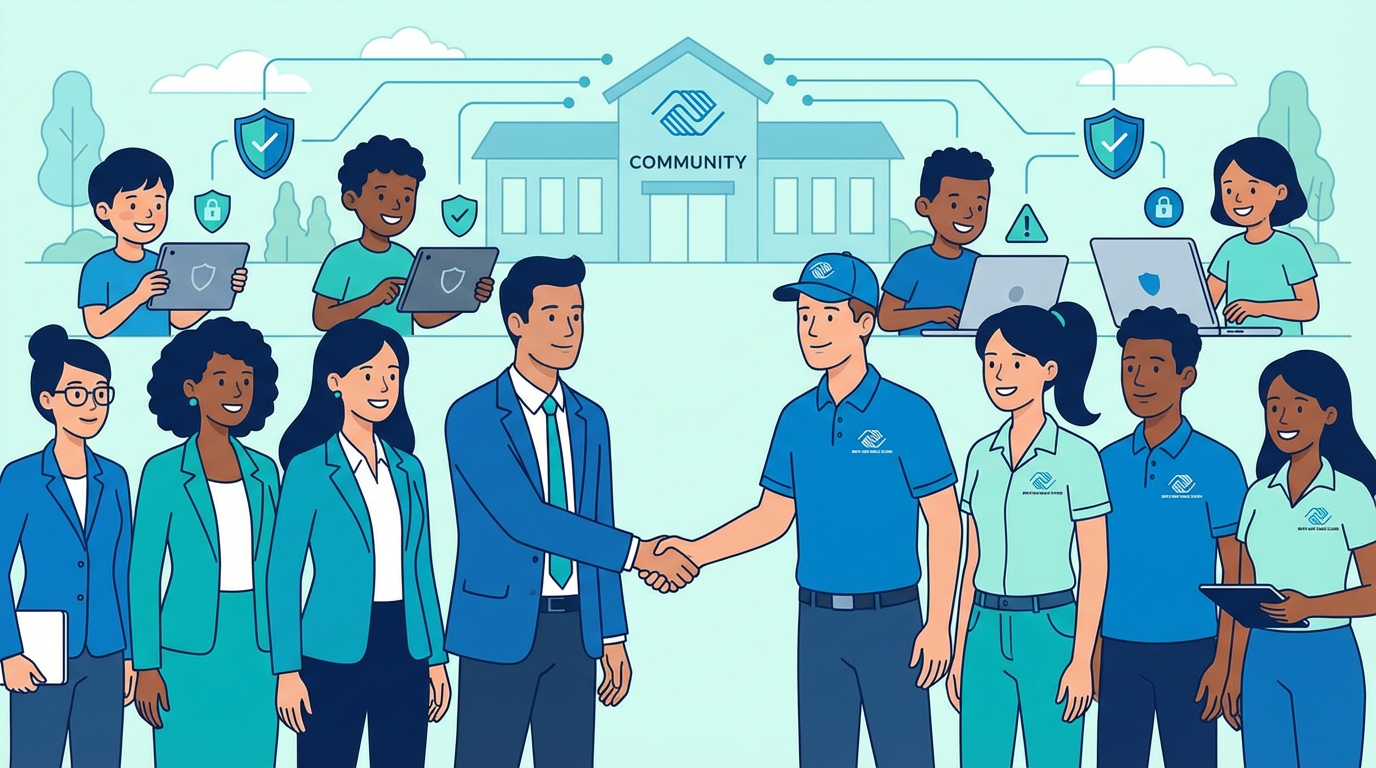
Effective implementation requires coordination across roles:
- Administrators set priorities, allocate resources, and communicate expectations
- IT staff manage filtering, monitoring, and device infrastructure
- Counselors connect monitoring alerts to student support services
- Teachers deliver digital citizenship instruction and model good practice
- Students provide insight into actual digital behaviors and help shape programs
- Parents reinforce school expectations at home and participate in education programs
Start with Quick Wins
Comprehensive transformation takes time, but schools can build momentum with immediate, visible actions:
- Implement or strengthen phone-free classroom policies
- Launch an anonymous reporting tool for online safety concerns
- Host a parent information night on social media risks and monitoring tools
- Introduce a brief digital citizenship lesson during the first week of each semester
Measure and Iterate
Track key metrics to evaluate progress and refine the approach:
- Number and nature of reported incidents
- Student and parent survey results on perceptions of digital safety
- Usage data from filtering and monitoring tools
- Academic and behavioral indicators that may correlate with digital wellness initiatives
The Role of External Partners
Schools do not have to build these programs alone. Organizations specializing in online safety, such as CyberSafely.ai, provide monitoring technology, curriculum resources, and implementation support designed specifically for school environments. Partnering with experts allows schools to move faster, avoid common pitfalls, and access tools that would be difficult to develop internally.
Conclusion
Creating a safe digital environment in schools is not a single initiative -- it is an ongoing commitment that integrates policy, technology, education, and community engagement. The schools making the greatest progress are those that treat social media safety not as a reactive measure but as a foundational element of their educational mission. By combining clear policies, thoughtful monitoring, robust digital citizenship programs, and strong family partnerships, schools can take a meaningful step toward ensuring that the digital lives of their students are as safe and productive as possible.