The screen time debate is one of the most common sources of tension in modern families. Parents know instinctively that too much time on devices is not good for their children, but finding the right balance -- and enforcing it without constant conflict -- can feel nearly impossible.
The good news is that the research on screen time has matured considerably in recent years, and there are clear, evidence-based strategies that work. The key is moving beyond rigid time limits and toward intentional, flexible boundaries that fit your family's real life.
What the Research Actually Says
For years, the conversation around screen time was dominated by a single number: the American Academy of Pediatrics (AAP) recommendation of no more than two hours per day. While that guideline has been updated and nuanced, it still provides a useful starting framework.
Current Guidelines by Age
- Under 18 months: Avoid screen use other than video calls with family. Babies learn best through direct human interaction, and passive screen exposure offers little developmental benefit.
- 18 to 24 months: If you choose to introduce screens, select high-quality programming (like educational shows designed for toddlers) and watch together. Co-viewing helps young children process and learn from what they see.
- Ages 2 to 5: Limit screen time to one hour per day of high-quality content. Continue co-viewing whenever possible, and talk about what you are watching together.
- Ages 6 to 12: There is no single magic number, but the emphasis shifts to ensuring screen time does not displace sleep, physical activity, homework, or face-to-face social interaction. The AAP recommends creating a personalized family media plan.
- Ages 13 and up: Teens need increasing autonomy, but guardrails still matter. Focus on healthy habits -- screens off during meals, no devices in bedrooms at night, and regular offline activities.
The Quality Matters More Than the Clock
One of the most important shifts in screen time research is the recognition that what children do on screens matters more than raw minutes. An hour of collaborative Minecraft with a friend is fundamentally different from an hour of passively scrolling short-form video. When setting boundaries, consider:
- Active vs. passive use: Creating content, learning a new skill, or connecting with friends is generally more beneficial than mindlessly consuming algorithmically served content.
- Age-appropriate content: Even within acceptable time limits, exposure to violent, sexual, or anxiety-inducing content can be harmful.
- Context: Using a tablet for a school research project is different from using it to watch YouTube at 11 p.m.
Practical Rules That Families Can Actually Follow
Abstract guidelines are helpful, but families need concrete, enforceable rules. Here are strategies that have proven effective for real families.
1. Create Screen-Free Zones and Times
Rather than tracking every minute, designate specific times and places where screens are simply not allowed:
- Mealtimes. Family meals are one of the strongest predictors of healthy child development. Keep them device-free for everyone, including parents.
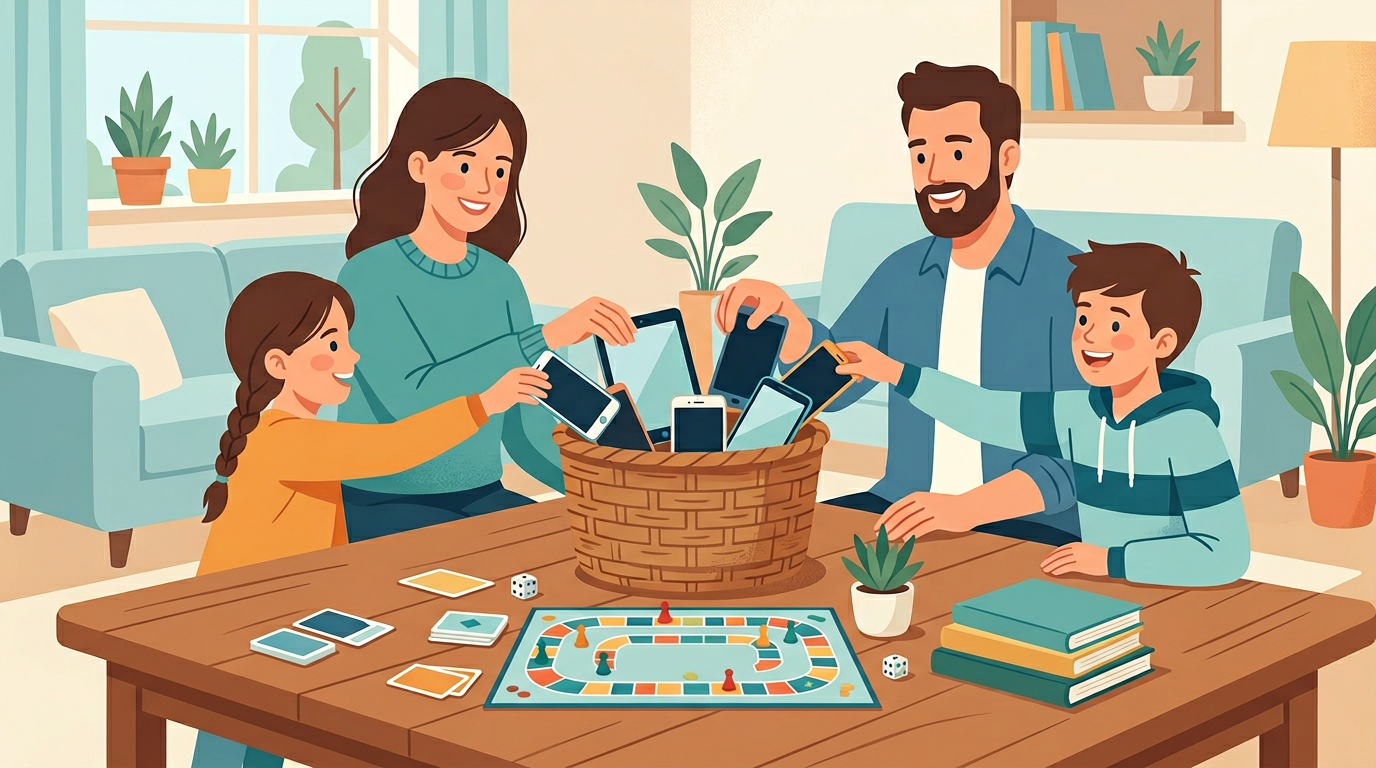
- Bedrooms at night. The blue light from screens disrupts melatonin production and sleep quality — one of the clearest links between social media use and teen mental health. Establish a family charging station in a common area where all devices go at least 30 minutes before bedtime.
- The first and last 30 minutes of the day. Starting the morning with a screen sets a reactive tone. Ending the day with one disrupts sleep. Protect these windows.
2. Use a Family Media Agreement
Sit down as a family and create a written agreement about screen time expectations. When children help create the rules, they are far more likely to follow them. Your agreement might include:
- Total daily or weekly screen time allowances
- Which apps and games are approved
- When and where devices can be used
- Consequences for breaking the agreement
- A regular review date to adjust the rules as children grow
The AAP offers a free Family Media Plan tool on their website that can help structure this conversation.
3. Lead by Example
Children mirror their parents' behavior. If you are constantly on your phone during family time, your screen time rules will feel hypocritical. Model the behavior you expect:
- Put your phone away during meals and conversations.
- Announce when you are choosing to read a book or go for a walk instead of scrolling.
- Be honest about your own struggles with screen time. Saying "I notice I've been on my phone too much today" normalizes self-regulation.
4. Offer Compelling Alternatives
Screen time battles intensify when children feel like they have nothing else to do. Keep a running list of offline activities your family enjoys:
- Board games, puzzles, and card games
- Outdoor activities like biking, hiking, or playing sports
- Arts and crafts supplies readily accessible
- Library trips and physical books
- Cooking or baking together
The goal is not to make screens the enemy, but to ensure they are one option among many rather than the default.
5. Use Built-In Parental Controls
Every major device and platform offers screen time management tools. Use them as a safety net:
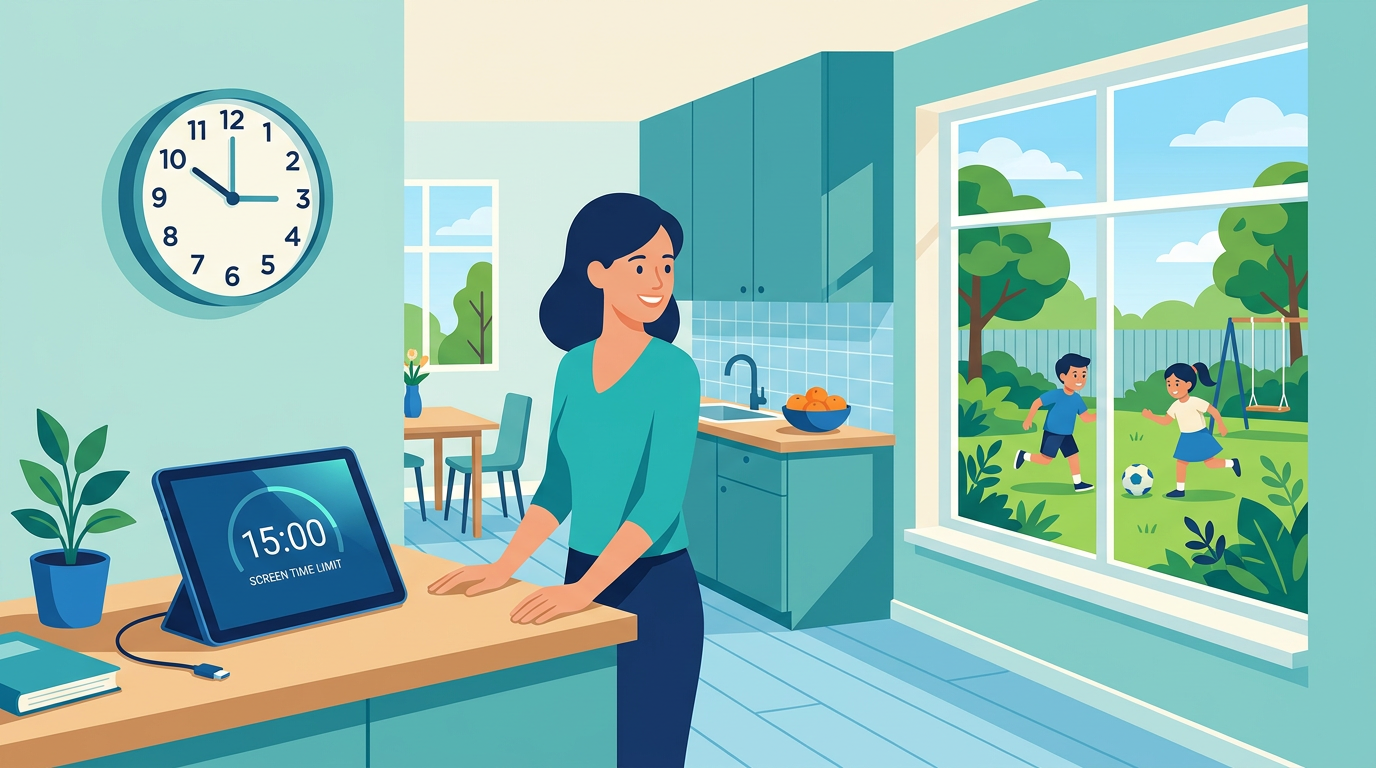
- Apple Screen Time and Google Family Link allow you to set daily time limits, schedule downtime, and restrict specific apps.
- Console parental controls on PlayStation, Xbox, and Nintendo Switch let you cap play sessions and restrict online features.
- Router-level controls can set internet schedules for the entire household, automatically cutting off Wi-Fi at bedtime.
These tools work best as a supplement to family agreements, not a replacement for conversation.
Handling the Pushback
Even the most thoughtfully constructed screen time rules will meet resistance. Here is how to handle it without escalating into a daily fight.
Stay Calm and Consistent
Children will test boundaries. That is developmentally appropriate. The most effective response is calm consistency. If the rule is screens off at 8 p.m., then screens are off at 8 p.m. every night -- not just when you feel like enforcing it.
Acknowledge Their Feelings
"I know it's frustrating to stop in the middle of a game" is more effective than "Because I said so." Validating your child's emotions while maintaining the boundary teaches them that feelings are real but rules still apply.
Avoid Using Screens as Rewards or Punishments
When screen time becomes currency -- earned for good behavior or revoked for bad -- it elevates screens to a status they should not have. Keep screen time rules separate from discipline whenever possible.
Adjust as They Grow
What works for a seven-year-old will not work for a thirteen-year-old. Revisit your family media agreement regularly -- every few months or at the start of each school year -- and involve your children in updating it. Gradually increasing autonomy as they demonstrate responsibility prepares them for managing their own screen use as adults.
Balancing Connection and Protection
The ultimate goal of screen time boundaries is not to wage war on technology. Screens are tools -- they connect, educate, entertain, and create. The goal is to ensure that screen use enhances your child's life rather than consuming it.
Families that succeed with screen time tend to share a few things in common: they communicate openly about expectations, they lead by example, they prioritize sleep and physical activity as non-negotiable, and they revisit their approach regularly as their children grow.
There is no perfect formula. But a thoughtful, consistent, and compassionate approach to screen time is one of the most valuable gifts you can give your family in the digital age.