It's Not Your Fault
Let's get something straight right away: if someone is bullying you online, that says everything about them and nothing about you. It doesn't matter what you posted, what you said, or what you look like. Nobody deserves to be harassed, humiliated, or threatened online. Period.
Cyberbullying can look like a lot of different things -- mean comments, rumors spread through group chats, fake accounts made to mock you, being excluded on purpose, or someone sharing your private messages or photos without permission. Whatever form it takes, your feelings about it are valid. If it hurts, it counts.
Why Cyberbullying Hits Different
Unlike in-person bullying, cyberbullying can follow you everywhere. Your phone buzzes at dinner. Notifications pop up before bed. It can feel like there's no escape because the internet is always on.
That constant pressure is real, and it's okay to admit it's getting to you. Feeling anxious, angry, embarrassed, or even numb are all normal responses. You're not being "too sensitive" -- you're being human.
What to Do Right Now
If you're in the middle of it, here are concrete steps you can take today.
1. Don't Respond
This is hard, especially when someone says something that makes your blood boil. But responding usually makes things worse. People who cyberbully are often looking for a reaction. Denying them that reaction takes away their power.
That doesn't mean you're being weak by staying quiet. It means you're being smart.
2. Screenshot Everything
Before you block anyone or delete anything, take screenshots. Capture usernames, timestamps, and the content of messages or posts. Save these somewhere safe -- a folder on your phone, a Google Drive, or send them to a trusted adult.
This evidence matters. If you ever need to report the behavior to your school, a platform, or even law enforcement, having proof makes a huge difference.
3. Block and Report
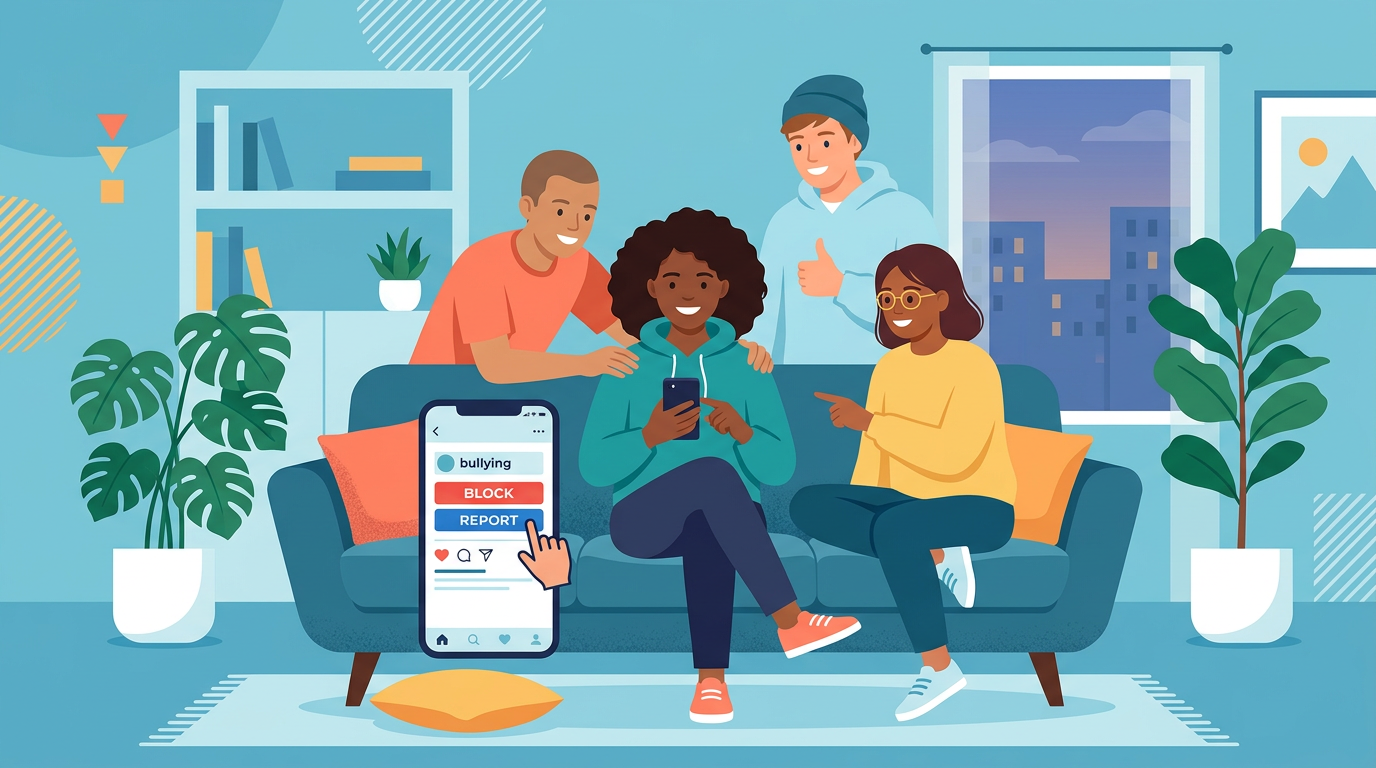
Every major platform -- Instagram, TikTok, Snapchat, Discord, X, YouTube -- has tools to block users and report abusive content. Use them. That's exactly what they're there for.
- Block the person so they can't contact you or see your content
- Report their messages, comments, or profile to the platform
- Mute group chats or conversations where the bullying is happening
Blocking someone isn't dramatic. It's self-care.
4. Talk to Someone You Trust
This might be the hardest step, but it's also the most important. Tell someone what's going on -- a parent, older sibling, school counselor, teacher, coach, or any adult you feel safe with.
You might worry that telling someone will make things worse, or that they'll take your phone away. A good starting line is: "Something is happening online that's making me feel bad, and I need help figuring out what to do." Most adults will respect that you came to them and will want to work with you, not against you.
5. Take a Break
You don't owe anyone your presence online. If social media or a specific app is making you miserable, it's okay to step away. Delete the app for a few days. Turn off notifications. Give yourself permission to breathe.
This isn't giving up -- it's giving yourself space to heal.
What NOT to Do
- Don't retaliate. Sending mean messages back can escalate the situation and could get you in trouble too.
- Don't delete everything immediately. You might need that evidence later.
- Don't blame yourself. Seriously. Reread the first section of this article if you need to.
- Don't handle it alone. You don't have to figure this out by yourself, and asking for help is a sign of strength.
If It's Getting Really Bad
Sometimes cyberbullying crosses a line into threats, stalking, or sharing intimate images without consent. If you're experiencing any of the following, it's time to involve a trusted adult and possibly law enforcement:
- Threats of physical violence
- Someone sharing (or threatening to share) nude or sexual images of you
- Repeated harassment from multiple accounts or after you've blocked someone
- Being stalked or tracked online
- Feeling like you want to hurt yourself
If you're in crisis or having thoughts of self-harm, reach out now:
- Crisis Text Line: Text HOME to 741741
- 988 Suicide & Crisis Lifeline: Call or text 988
- Childhelp National Child Abuse Hotline: 1-800-422-4453
These are free, confidential, and available 24/7. Real people are on the other end, and they want to help.
You Have More Power Than You Think
It might not feel like it right now, but you have options. You can document what's happening. You can cut off the person's access to you. You can bring in people who have the authority to do something about it. And you can protect your mental health by setting boundaries with technology.
Cyberbullying is not a rite of passage. It's not "just part of being online." It's a real problem, and you deserve to feel safe -- both offline and on.
How to Support a Friend
If someone you know is being cyberbullied, here's how you can help:
- Believe them. Don't minimize what they're going through.
- Don't share or engage with the bullying content. Even screenshotting it to show others can spread the harm.
- Encourage them to talk to an adult. Offer to go with them if that helps.
- Check in on them. A simple "Hey, how are you doing?" can mean more than you know.
- Be an upstander, not a bystander. If you see bullying happening in a group chat or comments section, speak up or report it.
The Bottom Line
Cyberbullying is serious, but it doesn't define you and it doesn't last forever. Take it one step at a time -- save the evidence, block the person, tell someone you trust, and take care of yourself. You deserve to exist online without fear, and there are people and resources ready to help you make that happen.
You're not alone in this.